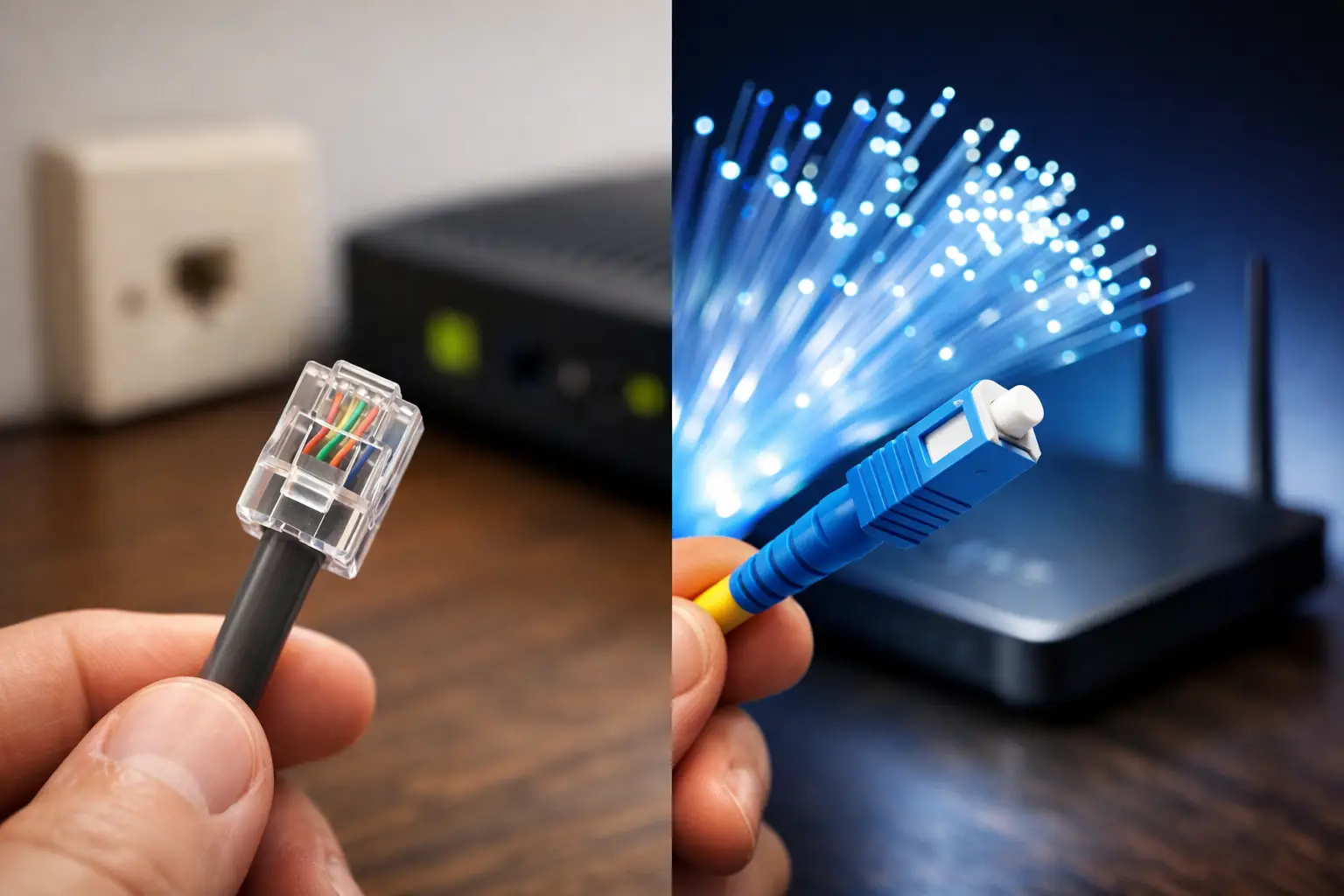

If the infrastructure isn't ready yet at your new home, or you want to get internet up and running quickly at your workplace, one of the first questions is usually this: who is wireless internet right for? There's no single answer. The right choice depends on the infrastructure in your area, what you use the internet for, your speed expectations and how much flexibility you want during installation.
Because of its name, wireless internet is sometimes confused with in-home Wi-Fi. What we mean here, however, is internet service delivered to the user through certain technologies without relying on a physical cable infrastructure. In other words, in some cases it's possible to get connected with a faster installation instead of waiting for fiber or VDSL. Especially when access matters as much as speed, wireless internet becomes a serious alternative.
Who is wireless internet a good option for?
The clearest answer is: people whose location lacks adequate fixed infrastructure, those who want fast installation and those looking for flexibility in their internet service. But this framework deserves a closer look.
In new residential areas, rural regions or buildings with limited infrastructure capacity, wireless internet often offers a practical solution. It saves time for users who want to get connected without dealing with cable installation, waiting for a port or long activation periods. This is especially important for families in the middle of a move and small offices that need to get to work quickly.
Another suitable profile is users who use the internet regularly but don't necessarily need the highest theoretical speeds. For needs such as online classes, video streaming, office applications, email, video calls and everyday device use, wireless internet can meet expectations in most scenarios. The key here is to assess your usage intensity correctly.
When does it make sense for home users?
Internet needs aren't the same in every household. A large family and a professional living alone naturally have different expectations. Wireless internet can be a strong option, especially for households with standard home usage.
It can deliver sufficient performance for people who work from home but whose work doesn't rely on very high data transfer. For someone who attends meetings all day, uses cloud-based office tools, shares documents and handles frequent email traffic, getting connected quickly is often very valuable. If fiber isn't available in their area or VDSL performance is unsatisfactory, wireless internet can become the more sensible choice.
The same goes for students. For online classes, research, video content and basic digital use, wireless internet can be sufficient. Flexible solutions stand out especially for renters, people who move often or those who don't want to deal with lengthy subscription procedures.
Holiday home owners also fit this profile. For a home used only during certain times of the year, waiting through long infrastructure processes is often unnecessary. Fast installation and practical use are more decisive here.
Which small businesses is wireless internet right for?
For small and medium-sized businesses, the internet isn't just a connection; it's a core part of the workflow. That's why the decision should take into account not only price but also continuity and installation speed. Wireless internet is well suited to site offices, temporary workspaces, small shops, workshops and businesses that need to get online quickly.
For example, in a newly opened business, the POS system, order tracking, cloud-based accounting software and communication tools need to start working right away. Waiting for fixed infrastructure can delay operations. In such cases, wireless internet helps the business get started faster. It's particularly advantageous for businesses that want location-based flexibility.
That said, needs may differ for businesses with very heavy data usage. In production teams that constantly upload large files, offices running high-capacity servers or work environments where many devices generate heavy traffic at the same time, the infrastructure type should be chosen more carefully. In other words, wireless internet can be a good solution, but it isn't automatically the best option for every business.
Scenarios where fast installation matters
For some users, even a few days count. If you're a family that just moved, a newly opened business or someone with a home office setup that needs to be up and running quickly, installation time becomes a direct decision factor. Wireless internet stands out here because it can reduce the need to wait for infrastructure preparation.
This advantage doesn't just save time. It also gives users a greater sense of control. Being able to easily manage application, activation and support processes through digital channels further improves the experience. For users who don't want to spend a lot of time on technical processes, the difference is noticeable.
Wireless internet has limits as well as strengths
Looking only at the advantages isn't enough to make the right decision. Wireless internet has areas that require attention as well as areas where it excels. Its biggest advantage is offering a solution where infrastructure access is problematic and providing flexibility in installation. For some users, it can also be very satisfying in terms of the balance between cost and speed.
However, performance can vary depending on your location and environmental conditions. Signal quality, regional congestion and usage hours can affect the experience. For this reason, a more detailed needs analysis should be done for highly sensitive work, work that is extremely intolerant of outages or work that constantly requires high upload speeds.
The basic approach should be this: before looking at how heavily you use the internet, look at how you use it. Two people on the same package can have completely different levels of satisfaction. A connection that's more than enough for one may fall short for the other.
What questions should you ask before deciding?
If you're considering wireless internet, first clarify your own usage profile. How many people connect to the internet at home at the same time? Is daily use mostly video, meetings and social media? Or do you need large file transfers, heavy gaming and consistently high performance? This difference determines the right type of service.
Second, you need to check which options are actually available at your address. Infrastructure that appears to exist on paper may not match real-world performance on site. That's why availability, installation time and support service should be evaluated together.
The third point is support. Internet service matters not just until you're connected, but for as long as you use it. Being able to get fast support when you have a problem is more important than the first speed test. So when choosing a provider, access to technical support should be as decisive as ease of application.
Who might it be less suitable for?
Other solutions may be more suitable for users who constantly demand very high bandwidth at a consistent level. For professional streamers, teams using intensive data center connections or corporate setups where many users generate heavy traffic simultaneously, needs become more specific.
Likewise, users who prioritize the lowest possible latency in competitive online gaming should carefully assess performance conditions in their area. What matters here isn't the name of the technology alone, but the real-world experience. The right solution isn't always the most popular one; it's the one that works most reliably in your scenario.
The final decision: think about your needs
Wireless internet can be a great fit, especially for users who don't want to wait for infrastructure, are looking for fast installation and want a balanced solution for everyday or moderate use. This fit is most evident among home users, students, people who have just moved, holiday home owners and small businesses. With services like Tepenet that offer options for both individual and business needs, the decision isn't just about choosing a package; application, support and ease of use are also part of the overall experience.
The healthiest approach is to evaluate the internet in terms of daily needs rather than technical jargon. If what matters to you is getting started quickly, sufficient performance for regular use and easy management of processes, wireless internet is a strong candidate. When deciding, come back to one question: what exactly do you expect from your internet? The right answer goes a long way toward pointing you to the right connection.