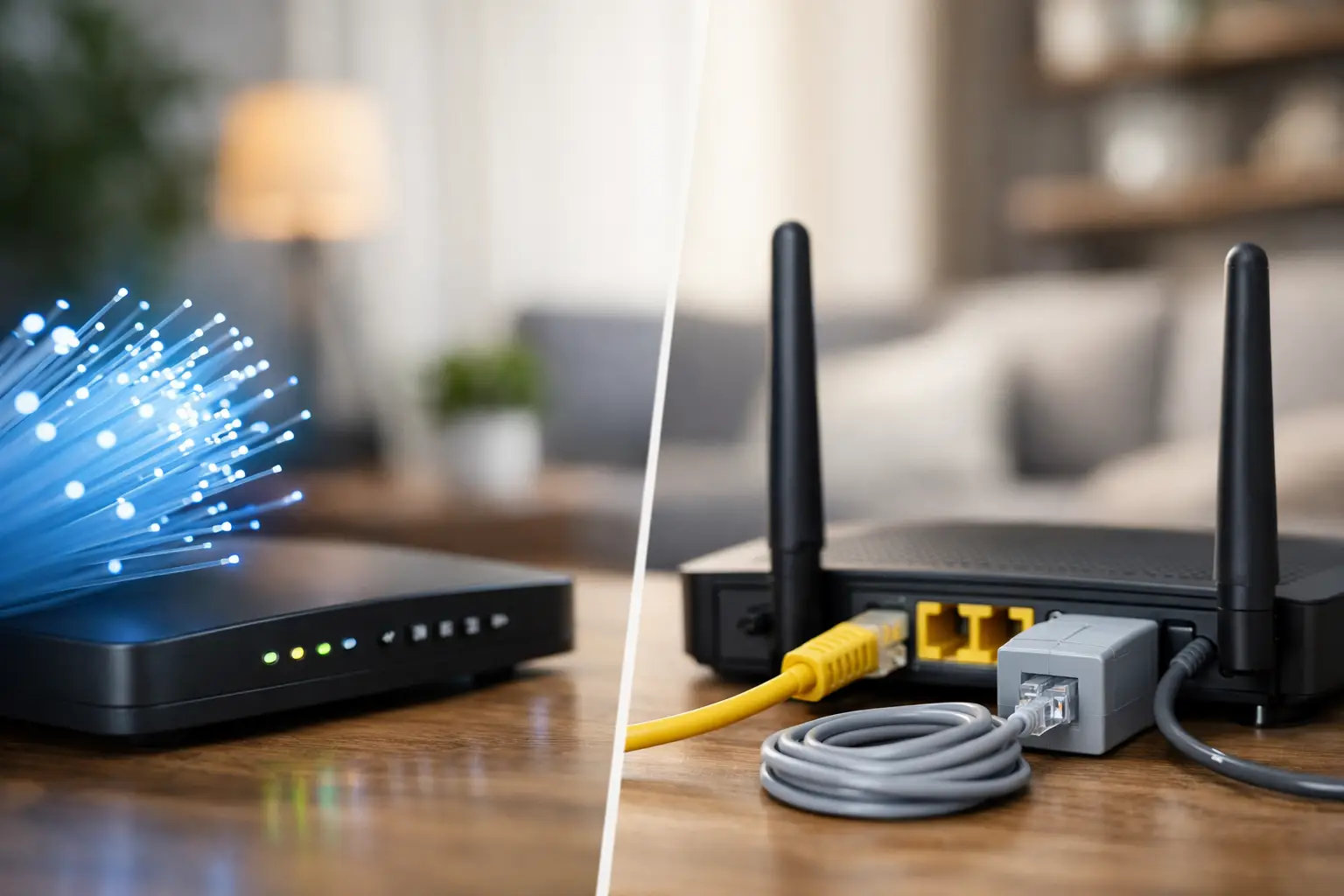
If picture quality drops while you're streaming a show in the evening, audio cuts out during an online meeting, or lag ruins your gaming, your question is most likely this: fiber or VDSL? The right answer doesn't depend only on the Mbps figure listed on the package. The infrastructure at your address, the number of people online at the same time at home and what you use the connection for all shape the decision.
Fiber and VDSL are two different technologies used to deliver internet to homes. Fiber generally offers higher speeds and lower latency, while VDSL, on suitable infrastructure, can be a strong value-for-money option for everyday use. The soundest approach is to first assess your needs, then look at the options actually available at your address.
Fiber or VDSL: What's the basic difference?
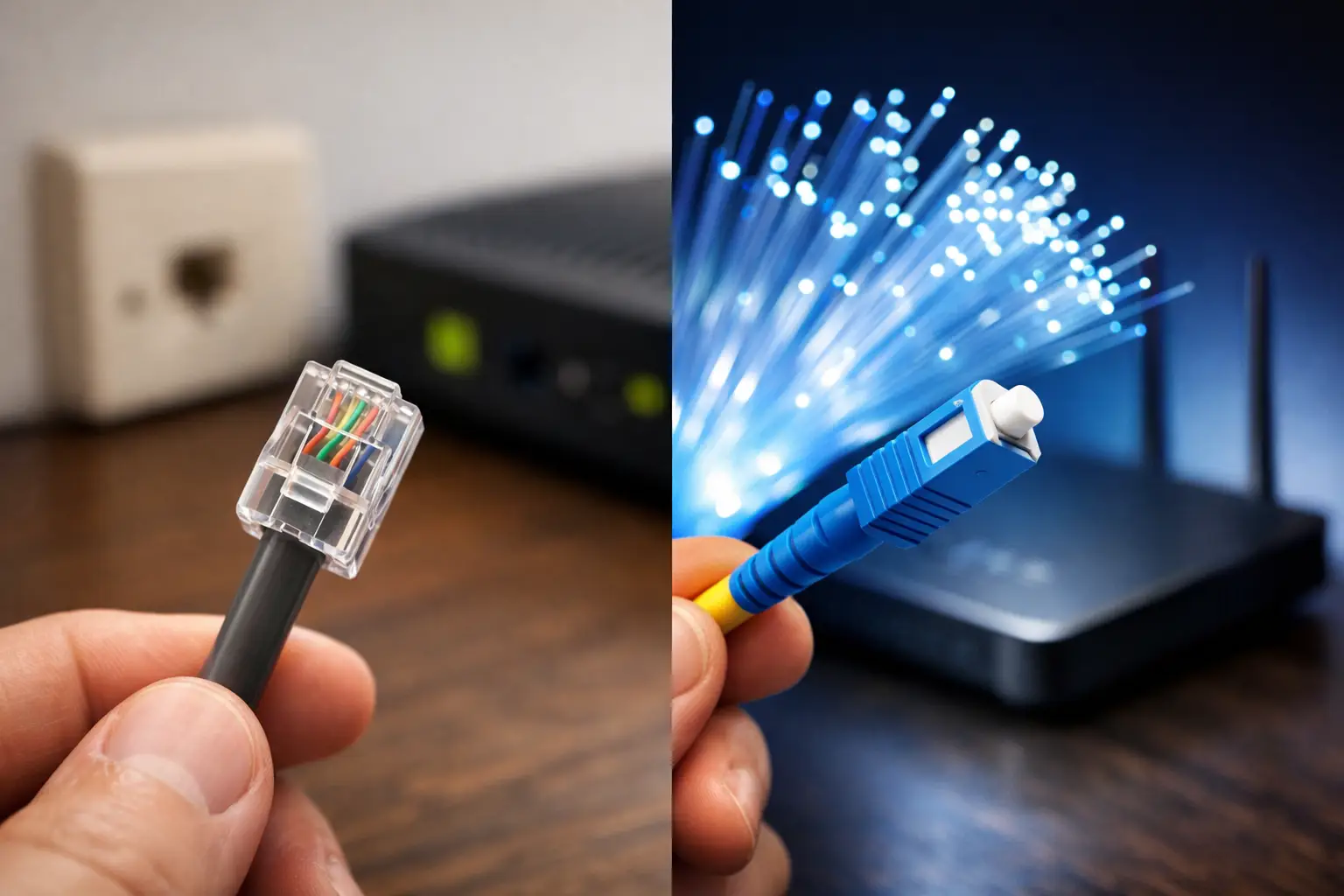
With fiber internet, data travels as light signals over optical cables. This makes high speeds possible and helps the connection stay more stable under heavy use. The difference becomes especially noticeable when several people in the same home are streaming video, making video calls, uploading files or gaming at once.
VDSL, on the other hand, is an internet technology that runs over copper telephone lines. It's faster than ADSL, but the speed you can get depends on factors such as your distance from the street cabinet and the condition of the wiring. So when choosing a VDSL package, the actual speed your line can deliver matters just as much as the maximum advertised speed.
That's why it isn't right to assume fiber is always the answer or that VDSL is automatically inadequate. If fiber is available and you use the internet heavily, it's usually the first choice. At an address without fiber access, a VDSL connection with good line values can work very efficiently for home and small office use.
Upload speed matters as much as download speed
When choosing an internet package, most users focus on download speed. That's natural for watching films, using social media and browsing websites. But for people who work from home, upload files to cloud storage, create content or run security cameras for a business, upload speed also directly affects the daily experience.
Depending on the infrastructure type and package, fiber connections can offer better upload options. Backing up a large presentation to the cloud, sharing high-resolution video or keeping your camera on in a video meeting all become easier. With VDSL, upload speed is usually more limited. This may not be an issue for users who only send emails and share basic files, but it will be noticeable for those who send data constantly.
When evaluating a package, ask yourself: is the internet at home mainly used to consume content, or to regularly create content and send files? In the first scenario, a good VDSL package may meet your needs. In the second, the capacity fiber offers is a more worthwhile investment.
Latency changes the gaming and video meeting experience
Latency is the time it takes for data to travel from your device to the internet and back. It's measured in milliseconds and matters especially for online gaming, live streaming and video calls. The lower the latency, the faster your commands get a response and the more responsive the connection feels.
By its nature, fiber infrastructure generally provides low and more stable latency. Competitive gamers, remote software teams and people with back-to-back online meetings throughout the day notice this difference more easily. You can certainly hold meetings and play games on a good VDSL connection too. However, line quality, in-building wiring and peak hours can have a greater impact on the experience.
The location of your modem and your home Wi-Fi setup also play a decisive role. Even the fastest infrastructure may fall short of expectations if the modem sits in a closed cabinet or devices are too far away from it. In larger homes, considering a wired connection, a mesh system or a suitable access point can noticeably improve connection quality.
How many people in your home use the internet at the same time?
For someone who lives alone, browses the web, watches videos and occasionally joins meetings, VDSL may be enough. But in a family of four where someone is streaming on the TV, the kids are logged in to online learning platforms and one person is working remotely, needs change quickly.
At this point, what matters isn't just total speed but how comfortably the connection handles simultaneous demands. Thanks to its high capacity, fiber gives multi-device homes much more room to breathe. With smart TVs, phones, tablets, game consoles, robot vacuums and security cameras all online, it's wise to choose a plan that leaves some headroom.
Small businesses face a similar situation. If POS terminals, cloud-based accounting software, a guest Wi-Fi network, IP cameras and staff devices all share the same line, connectivity needs differ from personal use. If the business sends data throughout the day, needs remote access or offers Wi-Fi to customers, fiber can provide a stronger foundation.
Why should checking infrastructure be the first step?
Before choosing an internet connection, you need to check which infrastructure is available at your address, because the technology you want may not be equally accessible in every building or on every street. Information such as whether fiber reaches the building or all the way to your apartment, the technical condition of the VDSL line and the speed the line supports helps you choose a realistic package.
If the check shows a fiber option, consider the speed tier that matches how intensively you use the internet. Not every user needs the highest speed. A home that mainly browses and streams doesn't have the same needs as one where remote work, gaming and large file transfers all happen at once.
If VDSL infrastructure is available, check the supported speed and your modem's compatibility. Old or worn in-building wiring can affect connection performance. If necessary, reviewing the cabling between the modem and the wall socket can help resolve issues such as dropouts and slowdowns.
Do the value-for-money math correctly
The most practical answer to the fiber or VDSL question is to pay for as much speed as you need. A faster package can strain your budget unnecessarily if it doesn't bring real benefits for your usage habits. On the other hand, choosing a package that's too weak for heavy use leads to constant slowness and the feeling of interruptions.
When comparing package prices, don't look only at the monthly fee. Installation terms, modem options, commitment requirements, campaign duration, possible add-on services and access to support channels are all part of the overall experience. Flexible options can be an advantage, especially for users who may move or whose usage changes seasonally.
Reviewing the offers available for your address with a provider like Tepenet, which offers different infrastructure options, makes it easier to decide without getting lost in technical jargon. Online application and digital service channels also make applying, tracking and managing your service more convenient.
Ask yourself three questions before deciding
The first question is whether fiber infrastructure is available at your address. If it is, and you use the internet heavily across many devices, fiber is usually the better long-term choice. Its advantage grows especially when working from home, gaming, live streaming, cloud backups and high-resolution content all come together.
The second question is how much upload speed you need. A user who only watches videos has different expectations from a professional who sends files all the time. The third question is how much small fluctuations in the connection would affect your work or daily routine. If uninterrupted meetings and low latency are critical, fiber stands out when the infrastructure allows it.
If fiber isn't available at your address, don't think of VDSL as a second-class option. With good line values, the right modem and solid in-home wiring, VDSL can deliver a satisfying connection for everyday use. The best choice is the one that takes into account both the infrastructure available at your address and your real usage habits.
Clarify the experience you expect from your internet, check your infrastructure and choose the package that fits your needs. The right connection doesn't just mean higher speed; it means working, communicating and enjoying your time more comfortably at every hour of the day.