
If video calls freeze in the evening, lesson videos won't load in the kids' room, or uploading files to the cloud at the office takes longer than it should, the problem may not simply be "slow internet." You may have chosen a package that doesn't match how you actually use it. When comparing internet plans, you should look not only at the Mbps figure on the screen but also at infrastructure, usage habits, total cost and support quality together.
The right choice doesn't mean picking the package with the highest advertised speed. The goal is to meet the performance needs of everyone and every device connected at home or at work at the same time, without straining your budget. To do that, you only need to clarify a few key points.
Why do internet plans differ even when they look the same?
Plans are usually judged by speed and monthly price. Yet two packages that look identical can deliver very different experiences. That's because the connection type, the infrastructure at your address, modem quality, installation conditions, contract length and the technical support you can reach when you need it all directly affect the experience.
For example, a 100 Mbps speed is not a guarantee of quality on its own. It also matters which infrastructure delivers that speed, how stable the connection stays during peak hours, and how well the Wi-Fi network covers every corner of your home. The results in a building with fiber infrastructure may not be the same as those of a connection under different conditions.
For businesses, the evaluation goes even further. In an office, POS terminals, security cameras, cloud-based accounting software, remote teams and a guest network may all share the same connection. That's why a business internet connection shouldn't be chosen based only on how quickly web pages load.
Step one: Find out what infrastructure is available at your address
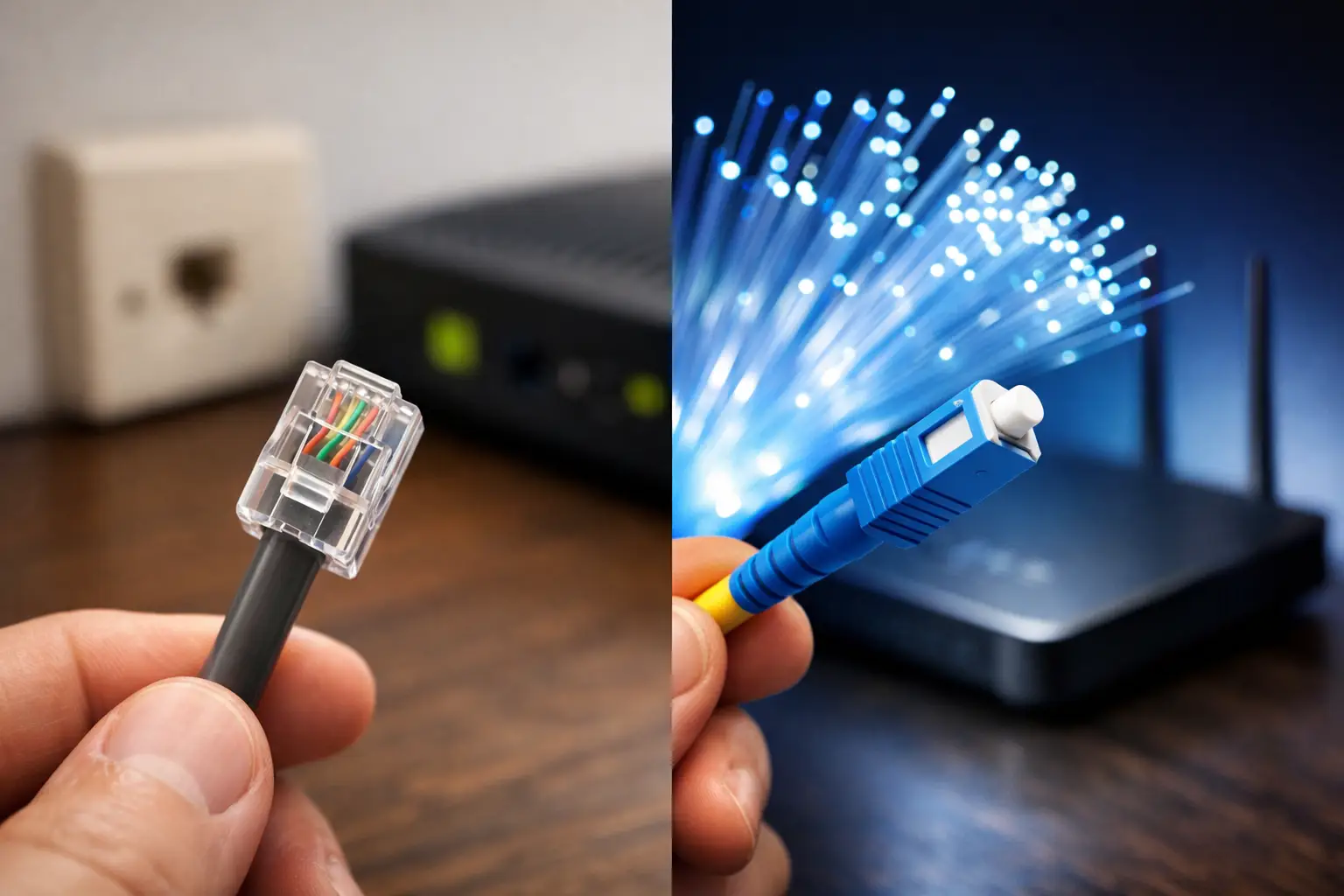
Before you start researching packages, check which infrastructure is available at your address. Fiber, VDSL and wireless internet options can meet different needs. The best plan is not the one offering the highest theoretical speed, but the one that can run efficiently and reliably at your address.
Fiber internet is a strong option for homes and businesses with high data needs. It can offer a smoother experience for users who are streaming 4K, gaming online, joining video meetings and uploading large files all at once. Upload speed in particular deserves attention for content creators, remote workers and businesses that rely on cloud storage.
VDSL can deliver sufficient performance for everyday use in many locations where the infrastructure supports it. With the right speed, it's an efficient alternative for email, social media, streaming platforms, online learning and standard video calls. However, the building's internal wiring and the physical condition of the line can affect the speed you get.
Wireless internet can be a practical solution where wired infrastructure options are limited. Here, regional coverage, signal conditions and usage density should be carefully considered. Running an infrastructure check reduces the risk of unexpected surprises after you apply.
Factor in the number of devices when choosing a speed
The most common mistake when choosing home internet is counting users only as the number of people living in the household. In reality, it's the connected devices that count: phones, computers, tablets, smart TVs, game consoles, cameras and smart home products all share the connection.
In a home with one or two people who mainly use social media, browse the web and stream in HD, a mid-range speed may be enough. But if two people work remotely, the kids take online classes and several screens are streaming in the evening, a higher-capacity package makes more sense.
For gamers, download speed isn't the only deciding factor. Latency, connection stability and Wi-Fi coverage throughout the home also matter. Similarly, for a professional who holds video meetings, upload performance directly affects picture and sound quality during calls.
For small businesses, it's important to think about peak hours. Determine how many employees and systems need the internet at the same time during morning opening, the lunch rush or end-of-day operations. Planning for your busiest moment rather than your quietest gives better results.
Compare total cost, not just the price
A low monthly fee isn't always the most economical option. When deciding, look at the introductory promotional price, the price afterwards, activation or installation terms, modem options and any possible add-on services together. That way, you can evaluate your budget over the entire period you plan to use the service, not just month by month.
Contract packages can offer price advantages for a set period. They can be cost-effective for users with steady usage needs and no plans to move soon. On the other hand, no-contract and prepaid options may suit people who might move, those staying short term, or anyone who wants more flexibility in managing their expenses.
There's no single right answer for everyone. What matters is reading the package terms and making your decision based on your lifestyle. Instead of looking only at the first month's price, take into account what happens after the promotion and any changes you might need.
Your modem and in-home Wi-Fi make a big difference
Even with a strong internet line, if your modem is old or poorly placed, you may experience weak connections in some rooms. Putting the modem in a closed cabinet, near the floor or behind thick walls can reduce wireless performance. A central, open and preferably elevated spot usually provides better coverage.
In large homes, duplexes or offices with many partitions, a single modem may not be enough. In that case, additional access points, mesh systems or wired connections are worth considering. Especially for devices that are more sensitive to interruptions, such as work computers, security systems or POS terminals, a wired connection can be the more stable option.
When choosing a plan, also check whether your modem supports the package's speed. Switching to a new package while keeping old equipment can limit the performance you expect.
Compare the application and support process too
An internet service isn't judged only on the days the connection works. How smoothly things go when you move, change address, track bills, update your package or need technical support also matters. Options such as online applications, an online self-service center, a mobile app and approval via e-Devlet save time.
On the support side, accessibility makes the difference. Knowing what to do when you have a connection problem, being able to quickly open a ticket through the right channel and getting updates on the process all strengthen the user experience. Tepenet aims to make this process more manageable by bringing different infrastructure options together with online applications and 24/7 technical support.
Before applying, find out how installation is scheduled, which documents are required, the modem delivery or installation terms, and the steps to follow if you move. These seemingly small details help your service get started as quickly as you expect.
Ask yourself before deciding
For a good choice, answer these four questions clearly: What infrastructure is available at my address? How many people and devices connect to the internet at the same time? How critical is upload speed for me? Does a contract fit my life or business plans?
The answers to these questions make it easier to narrow down dozens of packages. You can then compare speed options, total cost and service terms within the same framework. Rather than going by "cheapest" or "fastest" labels alone, choosing the package that won't disrupt your daily routine is the smarter investment.
For a home or workplace where your connection never keeps you waiting, start by measuring your needs, confirming your infrastructure and reviewing the terms carefully. The right internet plan is the one that works unnoticed throughout the day, yet is there for you whenever you need it.