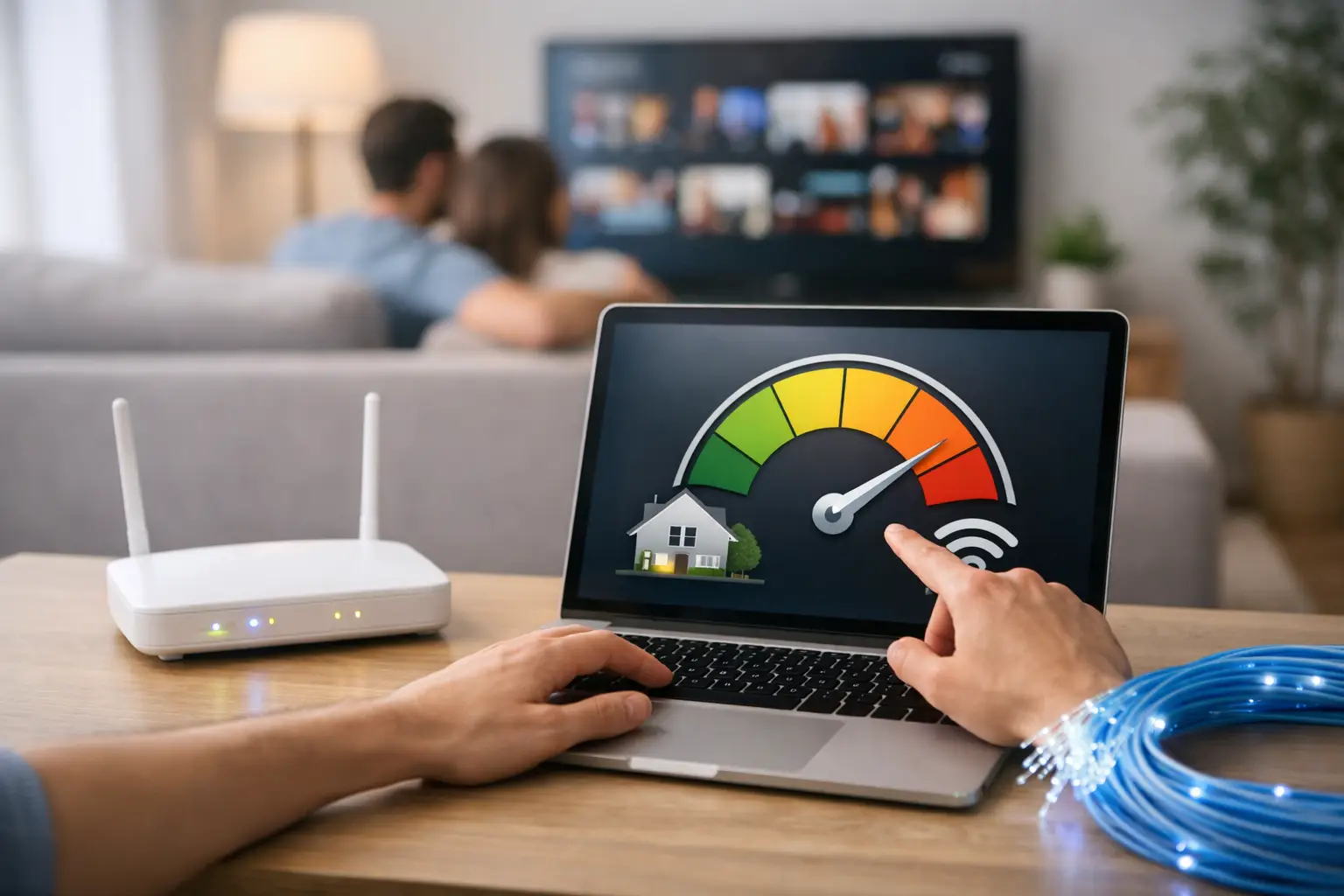

An internet package chosen because of its low bill can turn out to be expensive a few weeks later, thanks to slow evening connections, the feeling of an insufficient data allowance or support that is hard to reach. That is why looking only at the monthly fee is not enough when you are searching for an affordable internet deal. What really matters is seeing clearly how much speed, reliability and ease of use you get for the amount you pay.
If several people at home are streaming shows, joining video calls and gaming at the same time, a low price alone is not an advantage. The same goes for small businesses. When the point-of-sale system, cloud applications, security cameras and customer connections all run over the same line, internet service directly affects the workflow. So choosing a deal should be about matching your actual needs rather than chasing a short-term discount.
How do you evaluate an affordable internet deal?
A truly good deal protects your budget without lowering the quality of your connection. The first thing to check is the infrastructure. There can be a big performance difference between fiber, VDSL and wireless internet options offered in the same price range. The infrastructure available at your address matters more than the speeds listed on paper.
Another key point is the contract structure. A long-term contract can mean a better price for some users, but it can be a risk for those who might move or who want to stay flexible. No-contract or prepaid options may seem priced a little differently at first glance, but they keep you in control. This flexibility can be especially important for people who have just moved, students, or businesses setting up a temporary office.
Installation and activation also affect the real cost of a deal. If a low monthly fee comes with a high installation charge at the start, the total cost changes. Likewise, whether a modem is included, how equipment rental works and how long activation takes should all factor into your decision. In practice, this is where users struggle most: the deal looks cheap, and the full picture only emerges later.
Why should you read speed as carefully as price?
Internet packages often present speed as a single figure, and users naturally assume the highest number is the best offer. But a high speed that doesn't match your needs can mean unnecessary cost, while too low a speed can cause problems in everyday use. The right choice depends on your usage habits.
Someone who lives alone and mainly uses the internet for social media, email, online banking and watching videos doesn't have the same needs as someone who works from home and is in meetings all day. For families, the number of devices connected at the same time becomes the deciding factor. Once you add TVs, phones, tablets, computers and smart home devices, your speed needs grow faster than they seem on paper.
For businesses, the picture is even clearer. A slow connection isn't just frustrating; it leads directly to lost productivity. A lagging order screen, dropped camera feeds or slow customer payments may seem minor, but they can add up to serious losses over the day. That's why, for businesses, an affordable deal should be evaluated together with stability and support response times.
Which details make a difference when comparing deals?
Because deals often look similar, users tend to focus only on the price line. Yet a few details make a real difference when deciding. First, check whether the price stays fixed for the whole term or changes after a certain period. With packages that offer an introductory discount, always check what you will pay in the following months.
Second, technical details such as fair usage, data limits, upload performance and connection priority matter. Not every user needs to master these concepts, but it helps to know their basic impact. For example, for someone who uploads videos, uses cloud backup or sends files frequently, upload speed becomes more important than it first appears.
The third factor is customer experience. Online applications, subscription management through a mobile app, easy bill tracking and fast access to support are as valuable as price today. When something goes wrong, getting a solution within minutes is far better than a cheap service that is hard to reach. For today's users, internet isn't just about getting connected; it's about being able to manage the service easily.
The right deal profile for home users
For home internet, the ideal deal depends on how intensively you use it. A student flat, a large family, a professional living alone or a household that mostly uses the internet at weekends won't get the same value from the same package. So before choosing, it's worth clarifying how the internet is used in your home.
For a small household that works hard during the week and watches films in the evening, a mid-range package is often enough. But if one person in the home works remotely, another attends online classes and smart devices are constantly connected in the background, a more powerful option is needed. The goal isn't to go for the most expensive package, but to find the level that won't create a bottleneck.
Flexible subscription models are especially valuable for users who may move. This is where no-contract solutions stand out. Rather than focusing only on the price advantage at first glance, ease of cancellation and a convenient application process also determine overall satisfaction.
Choosing an affordable internet deal for small businesses
Businesses use the internet for operations, not comfort. So a business owner looking for an affordable internet deal shouldn't first ask "which package is cheapest?" but rather "what is the right cost that won't disrupt my business?" After all, the cost of an outage can be higher than a difference of a few hundred lira a month.
For businesses with office use, consistent connection quality, fast installation and access to technical support come first. Whether it's a café, shop, agency, accounting office or small manufacturer, the internet is now a fundamental business tool. Continuity is critical, especially for businesses that handle POS transactions, online order management and customer communication.
This is where a flexible package structure is a real advantage. Being able to move to higher speeds as the business grows, manage your subscription without extra paperwork and handle requests quickly through digital channels when needed makes the decision easier. With providers like Tepenet that offer options for both individual and corporate needs, this flexibility becomes even more meaningful.
Why is an easy application process now part of the deal?
A deal's value isn't just about price; how quickly it can be activated matters too. Especially for people moving into a new home or businesses that need a connection on short notice, online applications, digital document handling and remote approval processes save a great deal of time.
With traditional processes, users often get worn out chasing paperwork, approvals and appointments. Online transactions, mobile app support and a digital subscription flow shorten this process. For users, this isn't a technical feature; it is service quality itself. When fast applications, easy tracking and accessible support come together, a deal becomes more valuable.
A final checklist for the right deal
Before deciding, ask yourself a few clear questions. What infrastructure is available at my address? How many devices connect at the same time at home or at work? Is a contract an advantage or a risk for me? What will the total upfront cost be, including installation? If I have a problem, how quickly can I reach support?
These questions may seem simple, but they go a long way toward preventing the wrong package choice. Satisfaction with internet service doesn't come from the lowest price on a promotional banner, but from the right package that works smoothly in everyday use. A good deal eases the strain on your wallet without dragging down your connection quality.
The soundest approach is to look at the balance of speed, infrastructure availability, flexibility and support instead of making price the only criterion. That way, you won't just pick a cheap package, but an internet solution that truly fits your work and your life. When deciding, focus not on a short-term discount but on the total value of a service you'll use every day.